



Why Mazda Doesn’t Use CVT Transmissions
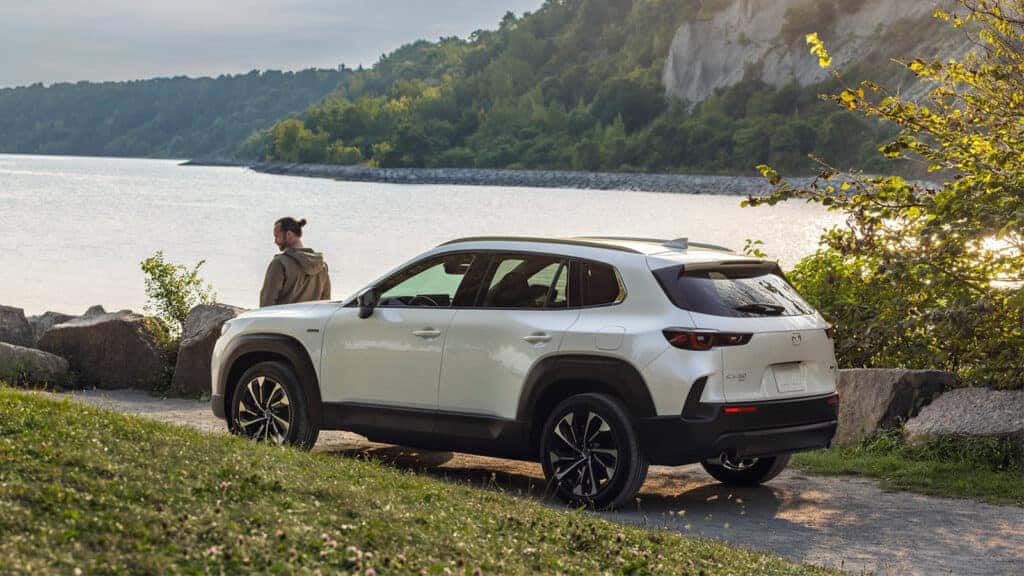
Ask any dedicated Mazda driver what sets their car apart, and the answer almost always comes back to feel. That intangible sense of connection to the road, where every input matters and the car responds with genuine precision. It doesn’t happen by accident. It’s the result of deliberate engineering decisions, including one that catches plenty of car shoppers off guard: Mazda has largely chosen to skip continuously variable transmissions (CVTs) in its lineup, even as many mainstream competitors have gone all-in on them. If you want to experience the difference firsthand, browse our new Mazda inventory and see what’s available today.
For buyers researching the Mazda CVT transmission question, the answer isn’t simply “they don’t like CVTs.” It runs much deeper than that, touching on core philosophy, engineering priorities, and what Mazda actually believes driving should feel like.
Why Mazda Took a Different Road on Transmission Design
When automakers started adopting CVTs in large numbers, the appeal was obvious. They’re mechanically simpler, they can improve fuel economy, and they eliminate the gear-hunting behavior found in older conventional automatics. Plenty of brands leaned in hard. Mazda didn’t.
That choice reflects something fundamental about how Mazda engineers think about cars. Efficiency alone isn’t the goal. The goal is a car that’s both efficient and genuinely enjoyable to drive. When those two things conflict, Mazda sides with the driver. The CVT question, then, isn’t really about hardware. It’s about values.
How CVT Transmissions Work And Why They Became So Common
Before getting into Mazda’s specific reasoning, it helps to understand what a CVT actually is and why so many automakers embraced it.
The Belt-and-Pulley Concept: Infinite Ratios, Seamless Acceleration
At its core, a CVT uses a belt-and-pulley system rather than a fixed set of gears. Two cone-shaped pulleys sit opposite each other, connected by a V-belt or steel chain. As those pulleys expand and contract, the effective gear ratio shifts continuously across an infinite range. There’s no traditional “first gear” or “third gear.” The transmission simply finds the best ratio for whatever the engine needs at that moment.
Because the engine can stay in its ideal power band without interruption, power delivery feels seamless. Press the accelerator and the car moves forward without any perceptible shift. A CVT is still an automatic transmission; you don’t operate a clutch or select gears manually.
Where CVTs Deliver Genuine Advantages for Everyday Drivers
CVTs genuinely shine in specific real-world situations. Stop-and-go city traffic is one of them. Because the transmission can hold the engine at its most efficient RPM regardless of vehicle speed, fuel consumption in congested conditions tends to be better than with a conventional geared automatic. That’s a real, measurable benefit for daily commuters.
The mechanical simplicity also has appeal. Fewer moving parts than a traditional multi-speed automatic means fewer things that can wear in certain designs. That simplicity contributed to their rapid spread across economy cars and crossovers throughout the 2000s and 2010s.
The trade-off is feel. Under hard acceleration, many CVTs produce what drivers call the “rubber-band effect,” where engine revs climb sharply while vehicle speed seems to lag behind. The engine drones at high RPM while the car catches up, creating a detached, floaty quality that enthusiast drivers find deeply unsatisfying. That’s precisely where Mazda draws the line.
Mazda’s Jinba Ittai Philosophy: Engineering for the Driver, Not Just the Spec Sheet
Mazda uses the Japanese phrase Jinba Ittai to describe its engineering ideal. Translated loosely, it means horse and rider as one, capturing Mazda’s belief that a car should feel like an extension of the driver’s intentions rather than a machine managing them. This philosophy directly shapes Mazda’s stance on CVTs: because a CVT abstracts the driver from the mechanical process of moving through the power range, it works against Jinba Ittai rather than supporting it.
This isn’t marketing language. It’s a documented engineering constraint that shapes decisions from suspension tuning to seat positioning to transmission technology.
SKYACTIV-DRIVE: Mazda’s Approach to the Automatic Transmission
Mazda’s answer to the CVT is the SKYACTIV-DRIVE automatic transmission. SKYACTIV is Mazda’s umbrella term for a suite of advanced engineering technologies designed to improve performance and efficiency together. The SKYACTIV-DRIVE transmission is built around a torque converter automatic with one key engineering distinction: an expanded torque converter lock-up range.
Most conventional automatics only lock up the torque converter at higher speeds. SKYACTIV-DRIVE locks up across a much wider range of operating conditions, dramatically reducing power loss and sharpening throttle response. The result is a transmission that behaves almost like a manual in terms of feel, while still offering the convenience of a fully automatic unit.
How SKYACTIV-DRIVE Produces Direct, Responsive Shifts
When the driver presses the accelerator, SKYACTIV-DRIVE responds quickly and definitively. Shifts feel purposeful rather than blurry. That’s a meaningful distinction from the seamless, ratio-free experience of a CVT, and Mazda considers it a feature rather than a limitation.
The wider lock-up range also means the engine and transmission work together more efficiently under normal driving conditions, capturing some of the fuel economy benefits that make CVTs appealing without sacrificing driver engagement.
Sport Mode and Paddle Shifters: Putting Gear Selection in Your Hands
For drivers who want more direct control, SKYACTIV-DRIVE includes a sport mode and paddle shifters on many models. Pull a paddle and the transmission drops a gear with a quick, satisfying response. Sport mode holds gears longer and reacts more aggressively to throttle inputs, letting the driver stay actively involved without committing to a full manual.
Have questions about which Mazda model fits your driving style? Reach out to our team and we’d be glad to help.
The E-CVT Exception: What Mazda Hybrid Owners Should Know
The honest answer to “does Mazda have a CVT?” is almost no. There is one meaningful exception worth understanding clearly.
Mazda’s hybrid models, including the CX-50 Hybrid and CX-70 Hybrid, use an electrically controlled CVT (E-CVT) as part of their hybrid powertrain. It works very differently from a conventional belt-driven unit.
How the E-CVT in Mazda Hybrids Differs from a Belt-Driven Unit
A traditional CVT relies entirely on a belt-and-pulley system to vary gear ratios mechanically. The E-CVT in Mazda’s hybrid vehicles uses electric motors to manage power distribution between the engine and drive wheels. The “CVT” description refers to the continuously variable nature of electric motor control, not a belt mechanism. There is no belt involved.
The electric motors modulate torque delivery with precision, allowing the hybrid system to blend gasoline and electric power seamlessly. The result is a smoother, more responsive experience than most belt-driven CVTs deliver, particularly at lower speeds.
Does the Hybrid E-CVT Change the Signature Mazda Driving Feel?
Mazda engineered the E-CVT specifically to preserve its driving character. The system is tuned to maintain responsiveness and give the driver a genuine sense of connection that conventional CVTs often undermine. For buyers considering a Mazda hybrid, the E-CVT shouldn’t be a concern. It’s not the same technology as the CVT you’d find in a competing economy car, and its calibration reflects the same Jinba Ittai priorities that guide everything Mazda builds.
What Transmission Comes in Each Mazda Model?
Mazda transmissions vary across the lineup, but the pattern is consistent: every choice is made to complement how that specific vehicle drives. Here’s a look at select current models:
| Model | Transmission Type | Notes |
|---|---|---|
| Mazda CX-90 | SKYACTIV-DRIVE 8-Speed Automatic | Turbocharged 3.3L inline-6, 280 hp; manual-shift mode on all models |
| Mazda CX-50 Hybrid | E-CVT (Electronically Controlled) | Hybrid powertrain; developed in partnership with Toyota |
| Mazda CX-70 Hybrid | E-CVT (Electronically Controlled) | Hybrid powertrain |
Across the broader lineup, including the Mazda3, CX-5, and MX-5 Miata, Mazda consistently opts for either the SKYACTIV-DRIVE automatic or a manual via SKYACTIV-MT. The MX-5 is widely considered one of the finest driver’s cars available at any price, and its manual gearbox is a significant part of that reputation. Mazda’s commitment to offering a manual option, even as most competitors have abandoned them entirely, says a great deal about where the brand’s priorities lie.
Is Mazda’s Transmission Philosophy the Right Match for You?
Not every driver needs or wants the engagement that Mazda prioritizes. For someone who commutes in heavy traffic and cares primarily about maximum fuel economy, other CVT-equipped vehicles on the market may be a perfectly reasonable choice. CVTs do what they’re designed to do well.
But for drivers who find genuine enjoyment in the act of driving, who appreciate when a car feels like an extension of their intentions rather than an appliance, Mazda’s approach tends to resonate strongly. Mazda CVT reliability concerns also lead many shoppers to the brand in the first place. Conventional belt-driven CVTs from certain manufacturers developed reputations for costly failures, especially under hard use or deferred maintenance.
The numbers support that confidence. According to RepairPal, the Mazda CX-5 with its SKYACTIV-DRIVE automatic scores 4.5 out of 5 for reliability, with an average annual repair cost of just $447. The Subaru Forester scores 3.5 out of 5, with an average annual repair cost of $632. That gap reflects a real-world durability advantage that reliability-conscious buyers consistently notice.
If you value efficiency, SKYACTIV-DRIVE delivers competitive fuel economy. If you value reliability, Mazda’s track record speaks for itself. And if you value the experience of driving, Mazda’s philosophy was built specifically with you in mind.
Test-Drive the Difference at Sport Mazda South in Orlando
Reading about transmission technology can explain the engineering, but it can’t replicate the experience of sitting behind the wheel. The shift response of a SKYACTIV-DRIVE automatic, the precision of a Mazda manual, the responsive feel of the whole driving package, these are things you need to feel for yourself.
Visit Us in Orlando
Come see the lineup in person at Sport Mazda in Orlando. Whether you’re interested in the CX-5, the CX-90, the MX-5 Miata, or any other model, our team can walk you through the differences and put you in the driver’s seat. Explore our new Mazda inventory to see what’s available, or contact our team to schedule a test drive at our Orlando location.
The answer to why Mazda doesn’t use CVTs isn’t in the spec sheet. It’s in how the car makes you feel when you’re driving it.
0 comment(s) so far on Why Mazda Doesn’t Use CVT Transmissions