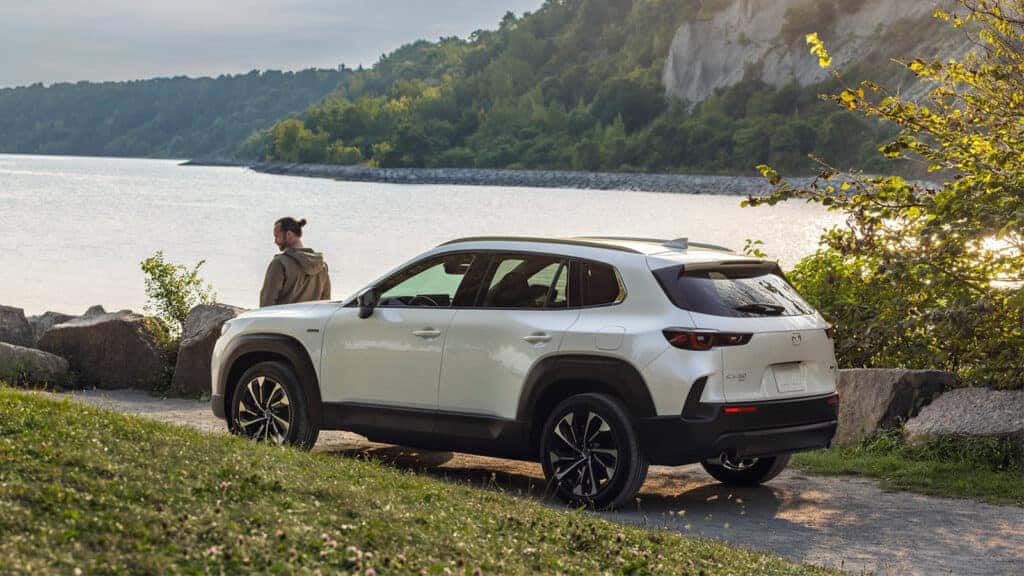

2026 Mazda CX-50 Hybrid vs. 2026 Toyota RAV4 Hybrid
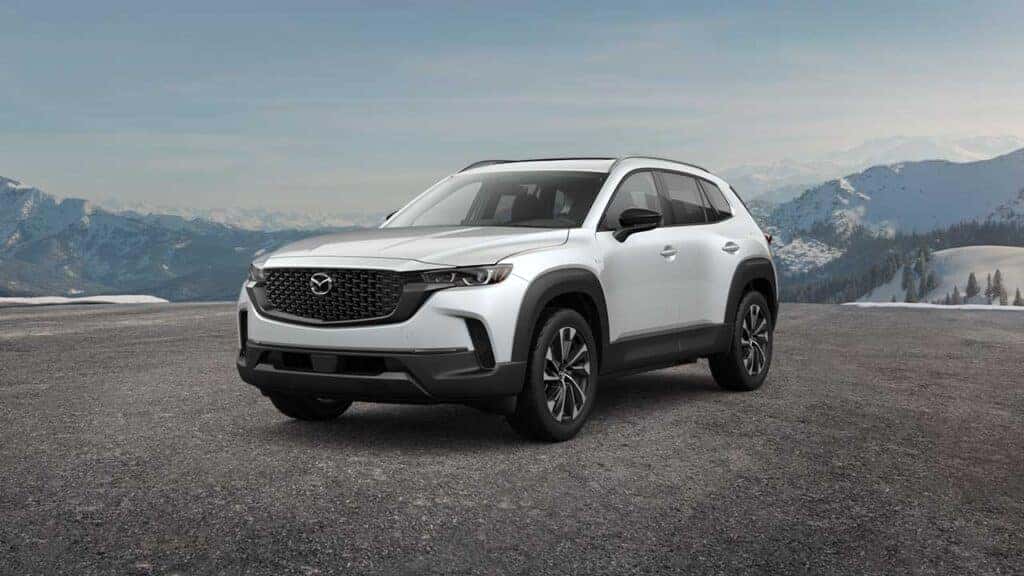
Shopping for a compact hybrid SUV usually comes down to two very different philosophies: proven reliability versus engaging performance. The 2026 Mazda CX-50 Hybrid vs 2026 Toyota RAV4 Hybrid comparison shows two vehicles that use similar technology but feel completely different when you’re actually driving them. The RAV4 has been the hybrid SUV king for years with its practical efficiency, while the CX-50 Hybrid brings Mazda’s “zoom-zoom” spirit to the electrified world.
At Sport Mazda South, we help Central Florida drivers figure out what separates these competitors so you can find the right match for how you actually drive.
Same Hybrid System, Two Completely Different Personalities
Here’s what might surprise you about the Mazda CX-50 Hybrid vs Toyota RAV4 Hybrid debate: both SUVs actually share Toyota’s proven hybrid setup. They both use a 2.5-liter four-cylinder paired with electric motors. This partnership between the manufacturers means they start with identical foundations, but that’s where things get interesting.
Mazda tuned their version for snappier throttle response and more immediate power delivery. The steering weighs more and feels more connected, giving you better feedback when you’re carving through corners. Toyota calibrated the RAV4 for smoother, more relaxed acceleration that prioritizes comfort over sportiness.
Suspension differences tell the real story here. The CX-50 uses firmer damping that cuts body roll and keeps everything planted when you’re making quick lane changes on I-4. The RAV4 floats over bumps with softer settings that soak up road imperfections but allow more body movement. These tuning choices mean your Mazda CX-50 vs RAV4 Hybrid decision really depends on what matters most in your daily driving.
Powertrain Performance and Fuel Economy
Power and Performance Numbers
Both SUVs share that hybrid system but deliver different results:
| Feature | 2026 Mazda CX-50 Hybrid | 2026 Toyota RAV4 Hybrid |
| Horsepower | 219 hp | 226 hp (FWD), 236 hp (AWD) |
| Torque | 163 lb-ft | 163 lb-ft (engine) |
| Transmission | Continuously Variable | Continuously Variable |
| Drive Modes | Multiple, including trail mode | Multiple, including trail mode |
| AWD | Standard | Available (FWD or AWD depending on grade) |
The RAV4 Hybrid beats the CX-50 in straight-line speed, hitting 60 mph in 7.1 seconds versus the CX-50’s 7.8 seconds. It also stops a bit shorter, with 70-0 mph braking at 179 feet compared to the CX-50’s 184 feet. But the CX-50 handles better, pulling 0.83 g on the skidpad thanks to that sportier suspension tuning.
Both SUVs can run on pure electric power during gentle acceleration and low-speed driving. The gas engine joins in seamlessly when you need more power or when the battery gets low. The hybrid system captures energy during braking and coasting that would normally just get wasted as heat. Those electric motors give you instant torque right from a stop, eliminating the lag you’d get from a traditional engine alone.
EPA Fuel Economy Numbers
The Toyota RAV4 Hybrid vs Mazda CX-50 Hybrid efficiency battle goes to Toyota:
| Metric | 2026 Mazda CX-50 Hybrid | 2026 Toyota RAV4 Hybrid |
| Combined MPG | 38 mpg | 41-44 mpg |
| City MPG | 39 mpg | 41-48 mpg |
| Highway MPG | 37 mpg | 36-42 mpg |
Toyota’s edge comes from their efficiency-focused tuning and the RAV4’s slightly lighter weight. Both all-wheel-drive systems boost traction on wet roads without killing efficiency. The CX-50’s system feels more performance-oriented, actively moving power between individual wheels during cornering, while the RAV4’s AWD focuses on stability when conditions get rough.
Driving Dynamics and Handling
The Mazda CX-50 vs Toyota RAV4 reviews always point to driving dynamics as the biggest difference. Mazda engineers chase something they call “Jinba Ittai” (the connection between horse and rider). The result? An SUV that responds precisely to your steering inputs with minimal body lean. The brake pedal gives you progressive, linear feedback that makes smooth stops easy to nail.
Toyota built the RAV4 Hybrid for comfortable daily commuting rather than weekend canyon carving. The steering feels lighter and takes less effort in parking lots. The ride quality soaks up expansion joints and potholes better than the firmer CX-50, something families with kids might really appreciate on rough roads.
The CX-50 Hybrid sits slightly lower than the RAV4, which helps it feel more planted. Ground clearance works fine for light off-road use, but the Mazda feels more car-like than truck-like. The RAV4 focuses on easy entry and that commanding seating position that gives you great visibility in traffic.
Interior Design and Premium Comfort
Cabin Materials and Design Approach
Slide into the CX-50 Hybrid and you’ll immediately notice Mazda’s focus on premium materials. Soft-touch surfaces cover the dashboard and door panels, with available black leather that features contrasting brown stitching on Premium Plus trim. The switches and knobs feel solid, with satisfying clicks and smooth rotation. Mazda positioned everything within easy reach, so you don’t have to stretch or look away from the road.
The RAV4 Hybrid interior emphasizes durability and practicality over luxury. Hard plastics show up more often, especially on lower dashboard areas. Toyota’s design works great for active families who need surfaces that wipe clean and resist wear. The cabin layout puts function first, with big door pockets and clever storage solutions everywhere.
The CX-50’s available 12.3-inch digital gauge cluster shows drive-mode animations that enhance that driver-focused experience. Both interiors offer comfortable seating for long hauls, though the CX-50’s front seats provide better side support during spirited driving.
Passenger Space and Cargo Reality
Interior space gets divided differently between these models:
| Metric | 2026 Mazda CX-50 Hybrid | 2026 Toyota RAV4 Hybrid |
| Front/Rear Legroom | 81.5 inches total | 78.8 inches total |
| Rear Legroom Advantage | +2 inches | Standard |
| Cargo (seats up) | 29.2 cu ft | 37.6 cu ft |
| Cargo (seats folded) | 56.3 cu ft | 69.8 cu ft |
The CX-50 gives rear passengers noticeably more legroom for better comfort. However, cargo capacity clearly favors the RAV4. The RAV4’s more upright cargo area handles tall items better, while the CX-50’s lower load floor makes lifting heavy stuff easier. Families who regularly haul sports gear might prefer the RAV4’s extra volume, while the CX-50’s more manageable size makes parking in tight urban spots simpler.
Technology, Infotainment, and Safety Features
Touchscreen Systems and Connectivity
The CX-50 Hybrid uses Mazda’s latest infotainment setup with a standard 10.25-inch display that responds quickly to your touches. The system includes wireless Apple CarPlay and Android Auto, so no more charging cables. Mazda’s rotary controller on the center console gives you an alternative to touchscreen interaction. The interface stays simple with clear menus and big icons.
Toyota gives the RAV4 Hybrid an 8-inch touchscreen on base models, stepping up to a 10.5-inch display on higher trims. The system includes wireless smartphone integration and cloud-based navigation on premium versions, though some features need subscriptions. Toyota’s interface follows a more conventional touchscreen-centric design that most people find immediately intuitive, though the system can be slower than Mazda’s quick-loading setup.
Both systems offer available premium audio upgrades and multiple USB ports. The CX-50’s available 12-speaker Bose system delivers exceptional sound quality, while the RAV4’s available JBL system provides excellent audio for the price.
Driver Assistance and Safety Tech
The Toyota RAV4 Hybrid vs Mazda CX-50 Hybrid safety comparison shows comprehensive standard equipment on both. Toyota’s Safety Sense 4.0 includes adaptive cruise control, lane departure warning, automatic emergency braking, and lane keep assist.
Mazda’s i-Activsense suite matches Toyota’s offerings with similar features plus traffic sign recognition and driver attention monitoring. The CX-50’s adaptive cruise control maintains smoother speed changes and feels more natural in stop-and-go traffic. Both vehicles offer blind spot monitoring and rear cross-traffic alert depending on trim level.
Higher trims add parking sensors and surround-view cameras. Both manufacturers earned top safety ratings from the Insurance Institute for Highway Safety and National Highway Traffic Safety Administration.
Pricing and Trim Level Comparison
The CX-50 Hybrid positions itself as a premium offering in the compact hybrid SUV segment, reflecting Mazda’s upscale materials and sophisticated driving dynamics. The CX-50 Hybrid comes as a hybrid-only lineup with standard AWD.
The RAV4 Hybrid offers multiple trims: LE, XLE Premium, and Limited (core); Woodland (rugged); SE, XSE, and GR Sport (sport-focused). This gives you more configuration choices. Mid-level trims of both vehicles fall within a similar price range when equipped with popular features like leather upholstery and premium audio.
Resale value historically favors Toyota, with the RAV4 holding stronger residual values due to its proven reliability reputation. Toyota’s hybrid technology has been testing itself for two decades, though both vehicles share the same fundamental hybrid system.
Which Hybrid SUV Should You Choose?
Choose the CX-50 Hybrid if you value engaging driving dynamics, premium interior materials, and a more intimate cabin environment. The Mazda rewards drivers who enjoy spirited acceleration on Orlando’s highway on-ramps and appreciate refined materials during daily commutes.
Pick the RAV4 Hybrid when maximizing fuel economy, cargo capacity, and proven reliability top your priority list. The Toyota excels as a practical family vehicle that handles daily commuting and weekend adventures with equal competence.
Budget-conscious shoppers might prefer the RAV4’s lower starting price, while driving enthusiasts will appreciate the CX-50’s superior handling and more refined interior. Both vehicles deliver the efficiency and all-wheel-drive capability that compact hybrid SUV buyers actually need.
Test Drive the 2026 Mazda CX-50 Hybrid at Sport Mazda South
Experience the CX-50 Hybrid’s engaging driving dynamics firsthand at Sport Mazda South, located at 9786 South Orange Blossom Trail in Orlando. Our team helps Central Florida drivers explore the CX-50 Hybrid’s features and compare it directly with competitive models. We invite you to explore our new Mazda inventory to see available CX-50 Hybrid models and current offers.
Schedule your test drive today to discover how the CX-50 Hybrid’s driver-focused design and premium interior elevate your daily commute. Our finance department works with multiple lenders to secure competitive rates on new Mazda purchases and leases. Contact our team to schedule your visit and experience why the CX-50 Hybrid represents Mazda’s commitment to delivering engaging performance with impressive efficiency.