



2025 Mazda CX-30 vs. 2025 Hyundai KONA
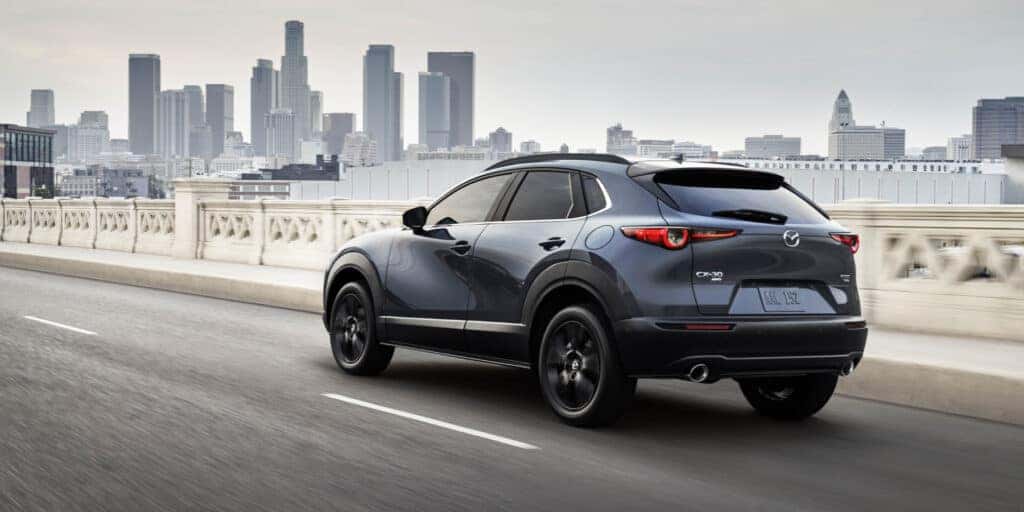
If you’re in the market for a small crossover, you might be stuck between the Mazda CX-30 and the Hyundai KONA. These two SUVs are highly sought-after due to their affordability and versatility. However, you may find one of them a better fit than the other. To help you make the right decision, check out this in-depth guide from our team at Sport Mazda South comparing the Mazda CX-30 and the Hyundai KONA.
Introduction to the Segment
The Mazda CX-30 and the Hyundai KONA are among the top contenders in the compact SUV segment. Vehicles in this market are very popular for their versatility. Their small dimensions make them perfect for urban commuters, while their cabins are spacious enough for active lifestyles.
While they’re both top-notch vehicles, the Mazda CX-30 and the Hyundai KONA are different in many ways. Like other Mazda vehicles, the CX-30 is notable for its sporty driving dynamics and refined interior. The KONA, on the other hand, is an attractive choice with generous features and excellent value. Finding the right model for you will depend on your priorities and how each vehicle performs.
Performance Comparison
Few compact SUVs can hold a candle to the Mazda CX-30’s performance, but the Hyundai KONA isn’t one of them. The CX-30 has two powertrain options. The standard 2.5-liter four-cylinder outputs 191 horsepower, while the optional 2.5-liter turbo-four generates an impressive 227 horsepower — or 250 horsepower with premium fuel. A slick six-speed automatic transmission and all-wheel drive are standard across the board. The CX-30 reaches 26/33 mpg (city/highway) with the base engine and 22/30 mpg with the turbo upgrade.
The Hyundai KONA comes standard with a 2.0-liter four-cylinder that outputs 147 horsepower and pairs with a continuously variable transmission. You can upgrade to the optional 190-horsepower 1.6-liter turbo-four engine, which pairs with an eight-speed automatic transmission. Both powertrains have a lower output than the CX-30’s base engine. However, what the KONA lacks in power, it makes up for in fuel economy, achieving up to 29/34 mpg with the four-cylinder engine and 26/32 mpg with the turbo-four option.
If you love joyriding, you’ll be better off with the CX-30. With its precise steering and athletic handling, this Mazda SUV is a blast to drive around corners and along twisty roads. Its remarkable agility also makes it a cinch to maneuver in tight quarters, making it ideal for city driving. The KONA also delivers excellent drivability, but it isn’t as engaging as the CX-30.
Interior and Comfort
Inside the Mazda CX-30, you’ll find one of the nicest interiors in the compact SUV segment. The cabin’s elegant design and premium materials give it an upscale atmosphere. In contrast, the Hyundai KONA’s more spartan interior uses lots of hard plastics, making it feel less inviting.
Both the CX-30 and the KONA come standard with cloth upholstery, keyless entry, and remote start. Higher trims offer upgrades such as heated front seats, a leather-wrapped and heated steering wheel, and dual-zone automatic climate control.
Both the Mazda CX-30 and the Hyundai KONA can seat up to five people. They offer a generous 41.7 inches of legroom in the front row, giving most adults ample space to stretch out. Rear passengers in the Hyundai can enjoy 38.2 inches of legroom, while the Mazda only offers 36.3 inches. The KONA also boasts an expansive cargo hold, giving you up to 63.7 cubic feet of space with the back rows folded — eclipsing the CX-30’s 45.2 cubic feet of cargo room.
Technology and Infotainment
Whether you pick the Mazda CX-30 or the Hyundai KONA, you’ll get a feature-rich infotainment system to keep you connected and entertained. Standard infotainment features in the CX-30 include an 8-inch touch-screen display, a pair of USB ports, a Wi-Fi hot spot, a six-speaker stereo, wired Apple CarPlay and Android Auto, a high-definition radio, a satellite radio, and voice recognition. The KONA comes with a larger 12.3-inch touch screen and wireless smartphone connectivity, but it doesn’t come standard with a Wi-Fi hot spot and voice recognition.
Safety Features
Both the Mazda CX-30 and the Hyundai KONA performed well in crash safety tests. For the 2025 models, both SUVs received the Top Safety Pick+ award from the Insurance Institute for Highway Safety and five-star ratings from the National Highway Traffic Safety Administration.
The CX-30 comes with a suite of standard driver-assistance features to make your trips easier and safer:
- Forward automatic emergency braking
- Pedestrian monitoring
- Blind-spot monitoring
- Forward collision warning
- Lane-keep assist
- Lane departure warning
- Rear cross-traffic alerts
- Adaptive cruise control
- Rain-sensing windshield wipers
- Driver-attention monitoring
- Rear-seat warning
Most of these features are also standard in the KONA, except for adaptive cruise control, rear cross-traffic alert, driver-attention monitoring, and rain-sensing windshield wipers, which are either optional or unavailable.
Pricing and Value
The Mazda CX-30 has eight trim levels to choose from, with a range of starting prices to fit your budget:
- 2.5 S: $25,195
- 2.5 Select Sport: $26,850
- 2.5 S Preferred: $29,140
- 2.5 S Carbon Edition: $30,140
- 2.5 S Premium: $32,340
- 2.5 Carbon Turbo: $33,140
- 2.5 Turbo Premium: $35,340
- 2.5 Turbo Premium Plus: $37,150
The Hyundai KONA has slightly fewer trims than the CX-30, with six options to choose from:
- SE: $24,550
- SEL: $25,900
- SEL Convenience: $28,100
- N Line S: $29,550
- N Line: $31,100
- Limited: $32,100
Although it has a slightly higher price range, the CX-30 outperforms the KONA in most categories, such as performance, safety, and tech features, making it a better choice if you want the most value for your money.
Test-Drive the Mazda CX-30 in Orlando, Florida, Today
If you’re stuck choosing between the Mazda CX-30 and the Hyundai KONA, consider your personal needs and preferences. The Mazda offers the best performance, interior quality, and driver-assistance features, while the Hyundai gives you more interior space and better fuel economy. If you live in Orlando, Florida, and want to check out the CX-30 for yourself, stop by Sport Mazda South, and we’ll set you up with a test-drive. You can also explore our Mazda inventory online and contact us to schedule a visit.
0 comment(s) so far on 2025 Mazda CX-30 vs. 2025 Hyundai KONA