



What is Mazda’s e-AWD System?
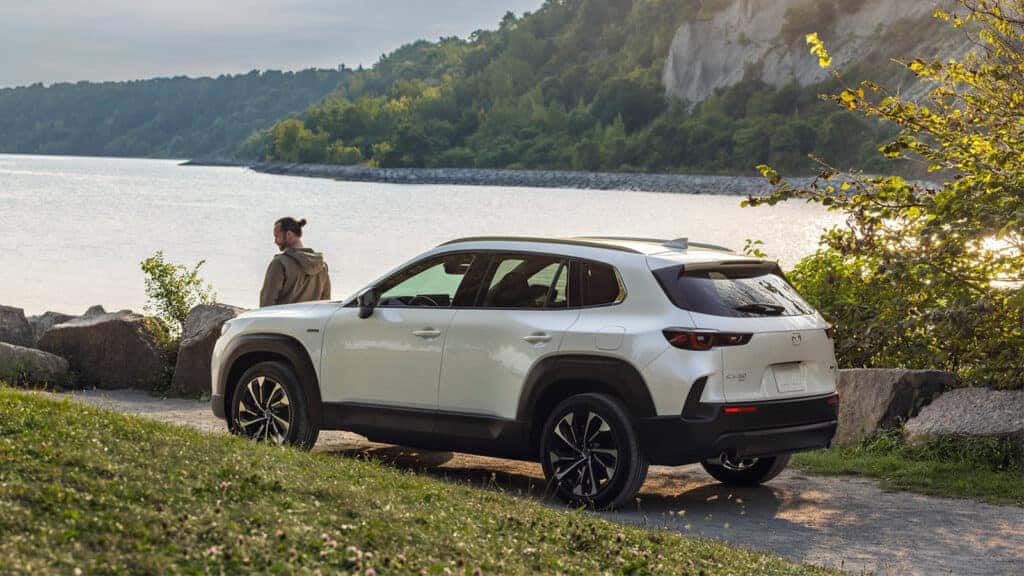
If you’ve been shopping for a capable, fuel-conscious SUV lately, you’ve probably come across the term “e-AWD” somewhere in Mazda’s lineup. It sounds technical at first, but the idea behind it is actually pretty straightforward. Mazda built this system to give everyday drivers the traction confidence of all-wheel drive while being smarter about when and how it uses power.
If you’re ready to see it in person, explore our new inventory and browse current CX-50 Hybrid availability. Once you understand how the system works, picking the right Mazda gets a lot easier.
What Is Mazda’s e-AWD System? A Plain-English Explanation
Mazda’s e-AWD is an electrically driven all-wheel drive setup that uses an electric motor to power the rear wheels independently from the front. Traditional mechanical AWD systems rely on a physical driveshaft running the length of the vehicle. This system skips that entirely, delivering torque to the rear axle through an electric motor instead, which means faster response times and more precise control.
What makes it genuinely compelling is the efficiency angle. It doesn’t run in AWD mode constantly. The system monitors driving conditions in real time and engages the rear motor only when extra traction is actually needed. Normal highway cruising? The vehicle runs primarily on its front-drive setup, conserving energy. Hit a wet intersection or a loose gravel patch, and the rear motor kicks in almost instantly. That’s a meaningful distinction from older AWD setups that either stayed on all the time or reacted too slowly to be truly useful.
Currently, the Mazda e-AWD system is featured in the 2026 Mazda CX-50 Hybrid, paired with a hybrid powertrain built around a 2.5-liter naturally aspirated four-cylinder engine and three electric motors. It’s one of Mazda’s most advanced all-wheel drive solutions and a clear signal of where the brand’s engineering is heading.
How the Mazda e-AWD System Works
To appreciate what makes this system genuinely useful, it helps to look at three things: the rear electric motor, the power distribution logic, and how it connects to the hybrid drivetrain.
The Rear Electric Motor and Its Role in Traction
The rear electric motor is the heart of this system. Sitting at the rear axle, it acts as a dedicated power source for the back wheels, completely separate from the front-mounted combustion engine. Electric motors deliver torque immediately, without the buildup delay of a gasoline engine, so the rear motor can respond to traction loss faster than any conventional AWD system.
This matters in real-world situations more than spec sheets suggest. Accelerate quickly on a damp road or navigate a slippery turn, and the rear motor engages in milliseconds, stabilizing the car before you’ve even registered the slip. That kind of instant response is one of the clearest advantages e-AWD has over mechanical alternatives.
How Power Is Distributed Between Front and Rear Wheels
Power distribution isn’t fixed here. The system continuously reads inputs like wheel speed, steering angle, throttle position, and driver behavior to determine the best torque split between front and rear at any given moment. Grip is plentiful? Power flows primarily to the front. The system senses a need for more stability? It shifts torque rearward.
This dynamic approach keeps the vehicle balanced without making the driver think about it. There’s no switch to flip or setting to choose for everyday driving. The system stays in the background until it’s needed, then steps in quietly and effectively. For people who want AWD reassurance without the fuel penalty of constantly running four driven wheels, this is a genuinely practical solution.
How e-AWD Integrates With the Hybrid Powertrain
The 2026 CX-50 Hybrid’s powertrain is where this system really shows what it can do. The front wheels are driven by a combination of a 2.5-liter naturally aspirated four-cylinder engine and an electric motor; the rear axle gets its own separate electric motor. Together, Mazda’s three-motor setup produces 219 horsepower combined and is paired with an electronically controlled CVT (e-CVT). A green EV indicator light on the dashboard lets you know when the vehicle is running on electric power alone.
The hybrid powertrain and e-AWD share a common goal: use the right amount of energy at the right time. The electric rear motor can also recover energy during braking and deceleration, feeding it back into the battery for later use. That regenerative behavior contributes to the CX-50 Hybrid’s EPA-estimated fuel economy of up to 38 mpg combined, a genuine achievement given that AWD systems traditionally carry a fuel economy penalty. The result is a real blend of efficiency and capability rather than a trade-off between the two.
Mazda e-AWD vs. i-Activ AWD: Understanding the Difference
Mazda’s reputation for capable all-wheel drive didn’t start with e-AWD. The brand has long offered i-Activ AWD across its lineup, including the popular non-hybrid CX-50. Knowing the difference between the two helps you choose the right setup for your needs.
i-Activ AWD is a predictive, mechanically connected system. It uses a wide array of sensors to monitor road conditions constantly, reading things like wiper use, outside temperature, and throttle input to anticipate when the rear wheels might need torque. A traditional driveshaft connects the front and rear axles, making it well-suited to a broad range of conditions including Sport, Off-Road, and Towing drive modes.
The e-AWD system takes a different approach. Rather than a mechanical connection, it uses a dedicated rear electric motor to deliver on-demand torque to the rear axle, allowing for sharper and more precise power delivery. Because electric motors respond faster than mechanical systems, e-AWD has an edge in reaction time. It’s also more efficient in normal driving since the rear motor isn’t drawing power unless it’s actively engaged.
The table below lays out the key differences side by side:
| e-AWD | i-Activ AWD | |
| How torque is delivered | Via rear electric traction motor; independent of front wheels | Mechanical, proactive torque distribution via sensors |
| Rear driveshaft present? | No — rear motor powers wheels directly | Yes — traditional mechanical connection |
| Best-use scenario | Wet/slick roads, hybrid efficiency-focused driving | Broader conditions; Off-Road, Sport, Towing drive modes |
| Drive modes available | Normal, Power, Trail (Mi-Drive) | Normal, Sport, Off-Road, Towing |
| Which models | 2026 CX-50 Hybrid | Non-hybrid CX-50 (2.5 S, 2.5 Turbo) |
Both systems reflect Mazda’s commitment to driver confidence and stability. i-Activ AWD remains an excellent choice in non-hybrid models, while e-AWD represents the next step forward, particularly well-suited to the electrified powertrain of the 2026 CX-50 Hybrid. Your best choice largely depends on whether you’re looking at a hybrid or non-hybrid model.
If you’d like help sorting through which setup fits your driving habits, contact our team and we’ll walk you through the options.
Mi-Drive Modes: What They Add to the e-AWD Experience
The e-AWD system gets even more versatile when paired with Mi-Drive, Mazda’s driver-selectable mode system. Mi-Drive lets you tailor how the vehicle responds based on the type of driving you’re doing, and all three modes work directly with the AWD system.
- Normal: The default everyday setting. e-AWD operates in the background, providing stability and traction support without any input required from the driver.
- Power: Optimizes hybrid power delivery for more responsive acceleration. Merging onto a busy highway or passing on a two-lane road feels more spirited, with the e-AWD system fully ready to maintain stability as increased torque reaches the road.
- Trail: Adjusts traction control and power delivery for uneven or unpredictable surfaces. It’s not marketed for rugged off-road use, but for CX-50 Hybrid owners who occasionally encounter rough access roads or loose surfaces, Trail mode makes the system meaningfully more capable than a standard road-focused AWD setup.
Together, these modes make clear that Mazda’s all-wheel drive is built for the full range of situations real drivers actually encounter, not just inclement weather.
How Mazda’s e-AWD System Performs in Orlando Driving Conditions
Orlando isn’t the first place most people think of when AWD performance comes up. No mountain roads, no heavy snowfall. But Central Florida has its own set of driving challenges, and the Mazda e-AWD system handles them well.
Florida’s afternoon thunderstorms are intense and fast-moving. Roads go from dry to soaked in minutes, and standing water can appear without warning. The e-AWD system’s ability to respond instantly to reduced traction means you get added stability the moment surprise rain hits, whether you’re navigating I-4 traffic or pulling out of a parking lot after a storm. That kind of seamless support doesn’t require adjusting your driving style or thinking twice about it.
Beyond wet roads, Orlando’s driving mix includes smooth highways, poorly maintained side roads, and occasional unpaved access paths near parks and rural areas. The e-AWD system handles this variety confidently, whether you’re on a freshly paved suburban street or a rougher surface on the city’s outskirts. For daily drivers who move between urban commuting and weekend outdoor activities, the system provides consistent reassurance across all of those conditions.
Is the Mazda e-AWD System Worth It for Your Daily Drive?
Whether e-AWD makes sense for your daily driving comes down to what you value in a vehicle. If you want a system that stays out of the way when you don’t need it but delivers real capability when you do, this is a strong fit. It doesn’t impose a constant fuel economy penalty the way traditional full-time AWD might, and it doesn’t leave you without rear traction assistance when conditions demand it.
For Orlando drivers specifically, the value proposition holds up well. Wet-road stability and light off-road capability are genuinely useful given the region’s weather patterns and terrain variety. The hybrid powertrain alongside the e-AWD system also helps offset operating costs, making the overall package more economical than it might initially appear.
One more reason the 2026 CX-50 Hybrid makes sense: e-AWD is standard on all three trim levels, Preferred, Premium, and Premium Plus. There’s no extra cost to access the system, and no trimmed-down version leaves it off the table. Whatever configuration fits your budget, you get the full e-AWD experience.
Frequently Asked Questions About Mazda’s e-AWD System
Does e-AWD require special maintenance?
Mazda’s e-AWD system doesn’t require maintenance beyond the standard service intervals for the CX-50 Hybrid. Because there’s no rear driveshaft or traditional AWD hardware to service, the maintenance footprint is simpler than that of a conventional mechanical AWD setup.
Does e-AWD work in Florida’s rain?
Yes, and it’s genuinely well-suited to Florida’s weather patterns. The rear electric motor responds in milliseconds to changes in traction, which means the system is already compensating for slick pavement before you’ve noticed any wheel slip. Heavy afternoon rain, wet on-ramps, and storm-soaked intersections are exactly the conditions where e-AWD delivers its clearest benefits.
Can you drive in e-AWD mode all the time?
The system is always active and manages AWD engagement automatically. In Normal mode, it monitors conditions continuously and deploys rear-wheel torque whenever it’s needed. You don’t need to select a special mode for e-AWD to function; it operates in the background during everyday driving.
Is e-AWD only available on the CX-50 Hybrid?
Based on Mazda’s current lineup, the e-AWD system as described in this article applies to the 2026 CX-50 Hybrid. Non-hybrid CX-50 variants use i-Activ AWD, Mazda’s separate mechanical AWD system. The two systems are distinct and should not be confused with one another.
Explore the 2026 CX-50 Hybrid at Sport Mazda South
The 2026 CX-50 Hybrid is the best way to experience Mazda’s e-AWD system firsthand. It combines a refined hybrid powertrain with one of Mazda’s most capable AWD setups, wrapped in an SUV that’s equally at home on a daily commute and a weekend getaway, available in Preferred, Premium, and Premium Plus trims with e-AWD standard across the board.
At Sport Mazda South, located at 9786 South Orange Blossom Trail, our team is ready to walk you through everything the CX-50 Hybrid offers. Whether you want to explore trim levels, run through financing options, or simply take one for a test drive, we make the process straightforward. If you’re curious about how the e-AWD system performs behind the wheel, come visit us or contact us and find out for yourself.
0 comment(s) so far on What is Mazda’s e-AWD System?